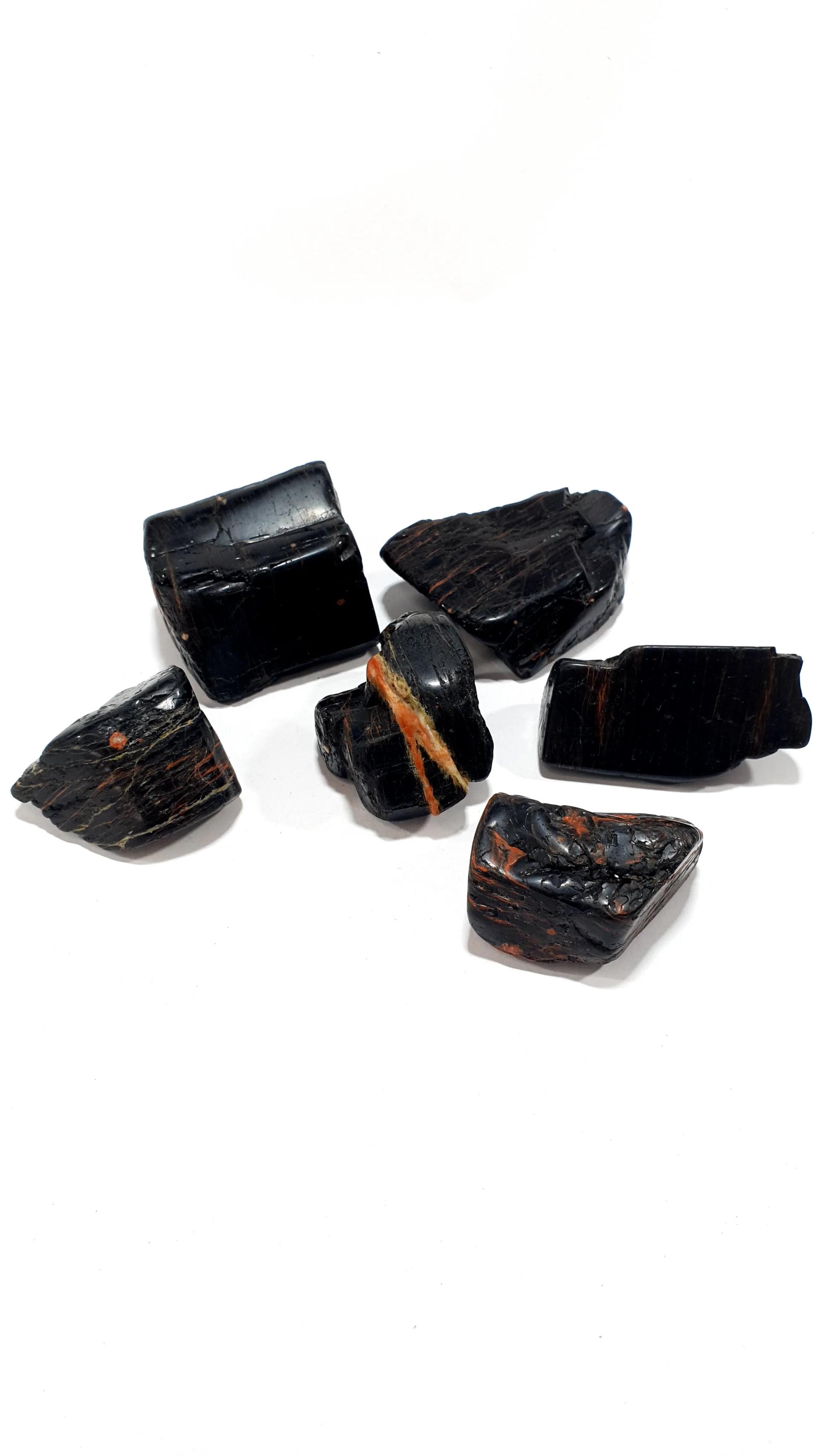
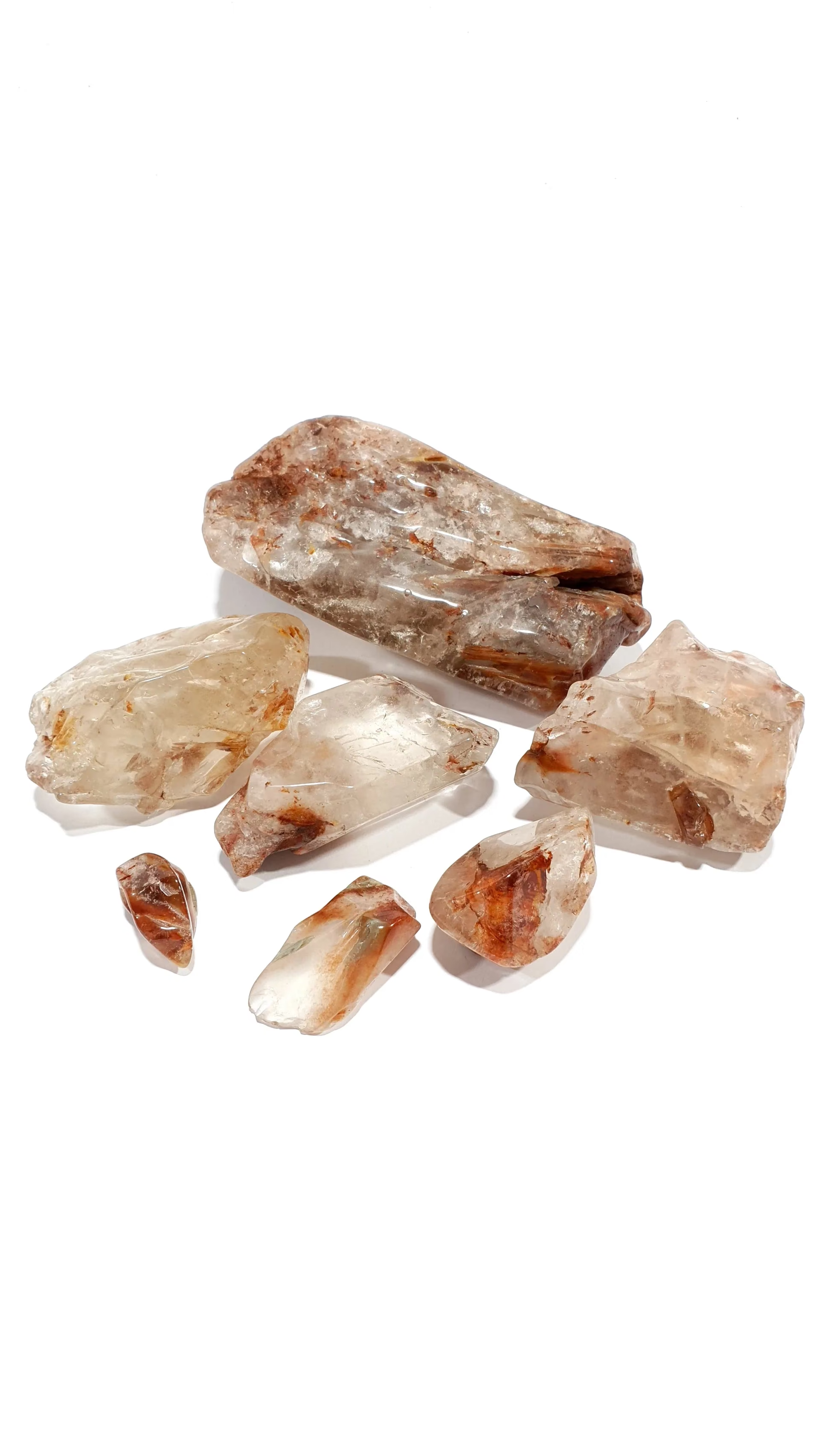
Amphibole or Amphibole — Rolled
As this is a natural product, variations in color and size may occur, and it may present cracks. This is not a defect — it is a detail that makes each product unique.
Price
SKU
RL40014
Stone
Amphibole
Form
Natural
Price
$15 / kg
Size
Approx. 3 - 9 cm
Weight
Approx. 0,001 - 0,000 kg
Piece count
Approx. 10 - 18 pcs
Amphibole is a group of double-chain silicates with the general formula (Ca,Na,K)₂₋₃(Mg,Fe,Al)₅(Al,Si)₈O₂₂(OH,F)₂, encompassing several mineral species such as hornblende, actinolite, tremolite and riebeckite. It forms predominantly in medium to high-grade igneous and metamorphic rocks, such as amphibolites, gneisses and schists, in addition to occurring in plutonic rocks such as granites and diorites. The color varies between dark green, black, brown and grayish blue, determined by the specific chemical composition of each species in the group — the concentration of iron, magnesium, calcium and aluminum in the crystalline structure defines both the tone and the mineral variety present. It presents characteristic prismatic cleavage in two planes with an angle of approximately 120°, a diagnostic property that distinguishes the group of amphiboles from pyroxenes. The mechanical rolling process progressively rounds the ends and corners of the parts, resulting in a smoothed external profile. Hardness: 5 to 6 on the Mohs scale. Density: 2.9 to 3.6 g/cm³. Crystalline system: monoclinic to orthorhombic. Available variations, approximate data: Size: 3 to 9 cm Unit weight: up to 250 g (approx.) Average: 10 to 20 pieces per kg (approx.)